Dugout-Talk.com

Baseball Coverage and Coaching Tips

Time To Think About Spring Training

For those of you lucky enough to live in warm weather climates where baseball can be played year round, Spring Training probably does not hold great importance. However, for many, the cold and snow of January and February do make the coming of baseball season seem light years away. For those of you in those climates, please, keep the faith! Baseball will be here soon. Note that the big leaguers are beginning their Spring Training seasons in Florida and Arizona by the end of next week, which means that the snow will eventually melt and baseball will be played in your neck of the woods in a matter of a few short months.

To help keep the mind sharp and hopes up for the upcoming baseball season, you can use the coming of big league Spring Training as a time to make sure you are getting your own game in gear for the coming year.

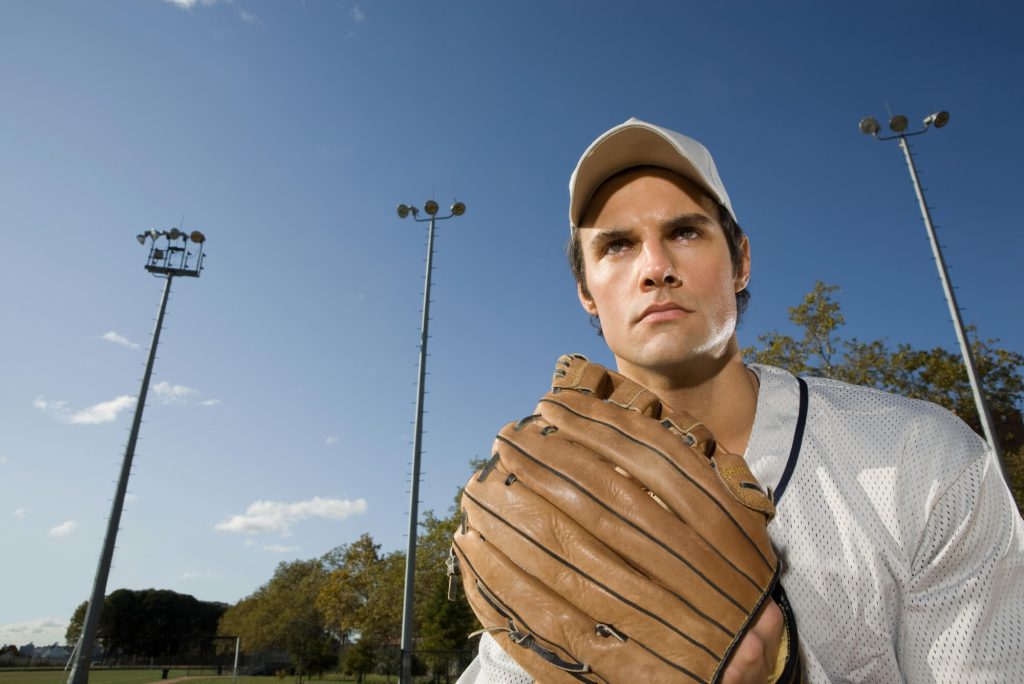
For the youngest players, this would be a good time to find your glove and make sure it is in shape, break the bat out of the closet and practice gripping the ball. For those who do not have equipment yet but are excited to try baseball this spring, this time of year is a good time to begin thinking of getting your equipment situation in order. Please check out our ‘Equipment’ page to find resources to help players of any age and level get ready for the new year.

For the intermediate players, this would be a good time to sneak out and have a game of catch with a friend or your dad when the weather permits. While running around on the field isn’t possible yet, there’s surely a driveway or a street path that can allow a quick game of catch that can get the eyes, arm, and body used to the movement of the ball and the excitement of playing once again.

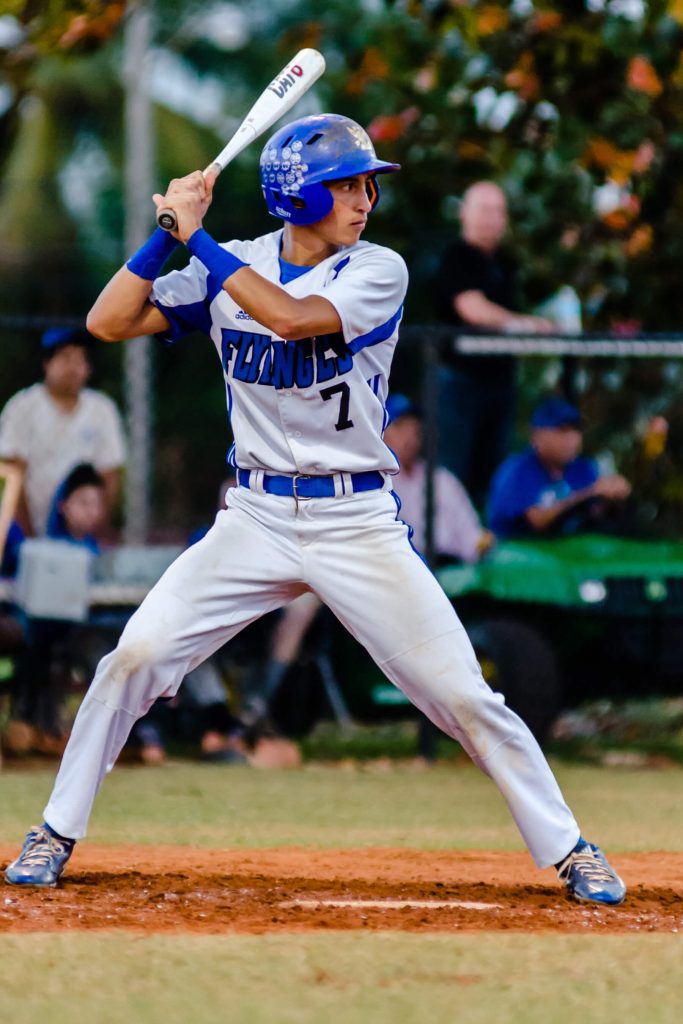
For the advanced player (anyone in high school or in advanced travel leagues), you will probably want to be able to get outside and play some catch come heck or high water. Your arms and legs will need some conditioning before the season starts, and this is the time of year to get the blood flowing and the muscles ready for action. In addition, any open space that can allow you to get some ‘dry swings’ (swinging at air) in would be great. An average professional or collegiate player would be getting 100-300 swings per day throughout January and February, so you should strive for at least 50-100 swings at air per week.

Most of all, keep the spirits up and get ready! Baseball season is on its way.

Hitting Drill: Gripping The Bat

Anyone working with 6-10 year old players can tell you that there is nothing beloved more by these youngsters than the excitement of hitting a baseball. Batting is a love that begins during these early years, and often times remains the part of the game that players fall in love with the most.

So what lessons can we teach our youngest hitters about this adored craft? Many valuable things. While the complex nature of hitting mechanics and mental approach is most likely above a player of this age, there are so many fundamental elements that can be digested and instilled in these young players. In fact, there is no better time to master oft-overlooked basics than when players are just learning the game, playing strictly for the fun and enjoyment they derive from their experiences.

This all being said, little guys who experience success when hitting will surely learn to love it even more. Where should we begin when helping these youngsters succeed swinging the bat?

Let’s start with a basic lesson that will stay with a player the rest of his life: Learning to grip the bat.

First, some overall talking points to remember whenever speaking to any specific element of the grip.

1) The grip should always be loose and tension-free. This will be something that a 6-10 year old will have a tough time mastering, especially if they are still developing the strength just to hold a bat (much less swing one). This must always be taken into account when working with players of this age, and we will refer to this later when troubleshooting common problems 6-10 year olds have when learning to hit for the first time.

General rule – no matter what, make sure that the 6-10 year old you are working with can hold and swing the bat being used with relative ease and without excessive labor. You will know if your player is unable to handle the size/weight of the bat they are practicing with if they cannot practice holding/swinging the bat with a tension-free grip. This tension indicates they are in need of extra support just to raise/move the bat they are holding. This tension will prevent them from properly learning the next fundamental steps needed to find success in hitting at this early age.

Test/Resolution: You can test your player’s ability to handle the bat with ease and without excessive tension. To do this, have the player hold the bat in their dominant hand (right or left) near the knob of the bat (allow up to 1/2 inch choking up). Then, have the player hold the bat out parallel to the ground at shoulder level, extending the bat and their arm straight out in front of them. If they can perform this action for 20 seconds continuously without the bat wobbling overtly or experiencing great body/arm tension, then you know that the player will be able to master gripping their bat with the necessary amount of ease and relaxation. If they cannot perform this test, have the player find a smaller bat that they can successfully pass with (you can even use a wiffleball bat for players of the smallest variety).

2) The bat should always remain in the control of the fingers, not in the palms of the hands. This, of course, is another element that plagues developing youngsters at this age. Depending on how small the player’s hands are, there might not be a way to avoid some palm contact on the bat. This is acceptable, but always make sure that no matter how small the player’s hands are, they should be utilizing their digits to hold/control the bat as much as possible, and avoid bat to palm-of-hand contact as much as possible.

Now that we have established these two general rules, we can move on to specific instructions on the proper grip at this age.

Players at this level should be assuming a traditional (or neutral) grip every time when they go to swing the bat. This involves lining up the “knocking-knuckles” on their hands when they assume their bat grip. What are “knocking knuckles”? These are the knuckles that most people knock on a door with (hint: it’s your middle set of knuckles).

Once a player has picked up the bat and lined up their knocking knuckles, they should be close to the correct grip. All that is left after this point is to review the two points above to make sure that the grip is loose and that the bat is being controlled by the fingers (and away fro the palm) as much as possible.

To check to make sure that this loose grip with knocking-knuckles in line is being employed, try the following tests with your player.

Grip Check A) Have the player lay the bat against their thigh with the knob by their thigh and the barrel on the ground in front of them. While facing the bat, have the player lay their hands under the band in preparation to pick it up, but have them keep their hands open still. Next, have them close their hands around the bat and lift the bat to their back shoulder (left-handed hitter, left shoulder — right-handed hitter, right shoulder). Once the bat is on their shoulder, have them look at their knuckles to check the alignment. If they are in a straight line, they are good to go.

Grip Check B) Another check can involve many/all of the steps in Grip Check A, but along with these, you can this alternative. Have the player point his index fingers after they have picked up the bat. If the fingers are pointing straight out away from the player (parallel to each other), than the player knows that the grip is correct. Grip should be corrected until these fingers are pointing straight out away from the player.

Congratulations! Once your player has mastered this element, he will be farther along than the majority of young hitters as far as fundamentals go. Also, the player will assuredly grow to have a looser, quicker swing that goes in the direction the player intends much more frequently than a youngster who does not master this simple skill.

Do not overestimate the importance of this skill. This drill should be repeated on a daily basis with hitters age 6-10, and performing Grip Check A and Grip Check B) are vital for reinforcement whenever possible.

Dry Swing Drills

1. Point, wiggle & swing – This drill is a combination of common grip checks along with the feel of adding a swing to this skill. To perform, have the hitter get the bat to the gripped position while resting the bat on his back shoulder. Once there, have the hitter point the two index fingers, and check that they are pointed in exactly the same direction (away from the player). After this, have the hitter wiggle ALL of the fingers on the bat while simultaneously lifting the bat of of his shoulder. This will ensure that the player is capable of being both loose with the grip and in control of the bat.

After the finger wiggles, have the hitter assume a ready position and stance (we will go over this in another lesson) and swing whenever ready. A successful attempt includes every element of this drill.

Recommended: 5-10 ‘Point, wiggle & swing’ reps per day.

Drills

Point, wiggle & hit – This drill is a combination of common grip checks along with adding the feel of hitting the baseball. To perform, have the hitter get the bat to the gripped position while resting the bat on his back shoulder. Place a tee in front of the player at the front of the center of home plate. Once there, have the hitter assume his comfortable position in the batter’s box and point his two index fingers to heck that they are pointed in exactly the same direction (away from the player, towards home plate). After this, have the hitter wiggle ALL of the fingers on the bat while simultaneously lifting the bat of of his shoulder. This will ensure that the player is capable of being both loose with the grip and in control of the bat.

After the finger wiggles, have the hitter assume a ready position and stance (we will go over this in another lesson) and hit the baseball with authority straight out towards CF (center of cage/net). A successful attempt includes every element of this drill, including a line-drive with solid contact.

Variations: Soft-toss and Front-toss can be done with ‘Point, wiggle & hit‘ as well.

Recommended: 10 minutes of focus on this drill each day a hitter of this age practices.

Common Faults & Troubleshooting

1) Too strong of grip – the majority of young players will grip the bat too tightly or too strongly. This means they are putting too much palm/fingers on the bat during the grip, and consequently cause their “knocking knuckles” to cross. Consequently, a hitter who does this will have a slower swing with the tendency to upper-cut without attempting to.

Solution: If you see this (and you will), have the player “un-twist” their hands, or if necessary, go through the grip checks A and B.

2) Ignorance/ Too Little Emphasis – The majority of players and coaches (including myself) will go over this important skill once or twice, and then forget about teaching it until the beginning of next season. Challenge your player (and yourself) to spend the first 10 minutes of hitting practice focused on these important grip basics. If this is done, the chances that the player will master a correct grip will greatly increase. A good grip will promote the finger/hand strength a player needs to exhibit easy, loose control of the bat needed for fluid, quick swing. A poor grip will prohibit these important nervous/muscular systems to develop correctly and delay proper hand/grip strength development needed.

Ok, It’s time for my thoughts on Mark McGwire.

In the great words of Bryan Burwell..” Stop…just STOP!”

Ok, so he used steriods…what one educated person didn’t think that he was juicing BEFORE the Congress hearing? It happened years ago. It’s over. IT’S OVER!!!!! It’s in the past. Come on people, McGwire is getting more hits on the internet in St. Louis than the the devestating tragedy in Haite for Christ’s sakes.

Look, all you people that jumping on the “Crucify McGwire” bandwagon, were the same ones that tuned into every game back 1998 cheering him on. I’m sick of it. Shut the hell up already.

He is coming in to be a coach, a hitting coach, which he could always do. Hopefully he doesn’t get tired of the constant BS that he will have to to deal with for the next several months.

Look, if I was in his shoes, I would have done the same thing in front of Congress. Hey, EVERYONE protects their own ass. Can’t blame him.

Here is food for thought, if the Cardinals come out this season on fire, all will be forgotten about the past.

Yeah…RIIIIIIIIIIIIIGHT!!!!

So Jimy Edmonds wants to come back with the Cards…whatever!!

Read it here.

I know we need a lefty hitter coming off the bat, but I don’t think this will fly.

What The St. Louis Rams Need…

photo06

Hey!!! It counldn’t hurt!

Juan Pierre to the White Sox

Juan PierreChicago White Sox general manager Kenny Williams has done it again. The Chicago Wite Sox have obtained OF Juan Pierre from the Los Angeles Dodgers for for two players to be named later, according to Yahoo! Sports. The Dodgers will also be picking up more than half of Pierre’s salary for the next two years.

Not a bad pick up for the White Sox, given that Pierre played in 145 games for the Dodgers in 2009, batting .308 with 31 RBIs and 30 stolen bases. He received a lot of playing time when Manny Ramirez was suspended for 50 games last year for steriod use.

Hitler Hates The Cubs!!!

Youth Baseball Warm Up Drill

Drill: Around the horn

Place a player at third, second, first and home. Everyone else lines up at home plate.

This youth baseball warm up drill starts with a player at home throwing to third then sprinting to third. The player on third throws

to second and sprints to second, the player on second throws to first and that player throws home. With younger kids this is hard,

but they get better and faster at this baseball drill as they master it.

The key is to keep the players moving and raise the intensity of the drill once they get better at it. This is a good way to begin a

practice in that it gets the players loose and focused.

It is good to position coaches and volunteer parents near the bases with a bucket of balls in case of overthrows, to keep the drill

going.

This is good for confidence in younger kids and shows them that they can make the throws under some pressure.

Little League Baseball Drills – Squaring Ground Balls

I sent out a request for my newsletter subscribers to send in their best free little league baseball drills. Check out these drills

below sent in by Kent and Roger (very creative!).

From Kent…
I use this baseball drill to teach the progression of squaring a ground ball, backhanding or forehanding it or diving for it.

I use a machine to place ground balls in the hole. Have the players move them in to a position that challenges them. After a few

attempts we have them move stop where the stop must be made with a backhand or forehand stop. Then more of a distance to teach them

to lay out or dive for the stop.

After each progression has been completed a few times we mix it up. We work this drill from all positions in the infield and have

each player take one turn then rotate. Also you can have a player play any base to teach a quick recovery into a throwing position

and the release of the ball as they throw to the designated base.

From Roger…
I have a player stand in between two cones about ten feet apart. The player breaks down and I roll a ball towards the player off to

one side and the player has to slide over and get in front of the ball. The player must then get the ball back to the coach. As the

ball gets to the player I throw a second ball to the other side of the player and they have to slide over in front of this ball and

pop up and make a good throw back to the coach.

Little League Baseball – Monkey in the Middle

Coming up with new ideas for drills for free little league baseball can sometimes be a challenge. Here’s a baseball drill from Steve

that is working well.

Monkey In The Middle

This helps my players, when throws come in from the outfield, to quickly relay the ball. Also helps on double plays.

Imagine a tic-tac-toe board. Place a person in each box with three balls, one given to each person on the end of the row. To start,

that person throws to the one (monkey) in the middle row. She then throws to the person on the other end. Then that person throws

back to the person in the middle and then throws to the person starting the sequence. Then the process is repeated.

This starts slow and speeds up as you go. What this helps develop is that the monkey in the middle turns towards the person throwing

the ball with their throwing arm side. This allows the ball to come into the gloved hand, across the body. This will allow the

throwing hand to be behind the ball ready to throw as oppose to catching the ball out in front of you, and having to then turn the

body towards the target.

The coach must watch and correct each player when they step toward the thrower with their gloved hand because they will!